Saturday, September 30, 2017

three door monty

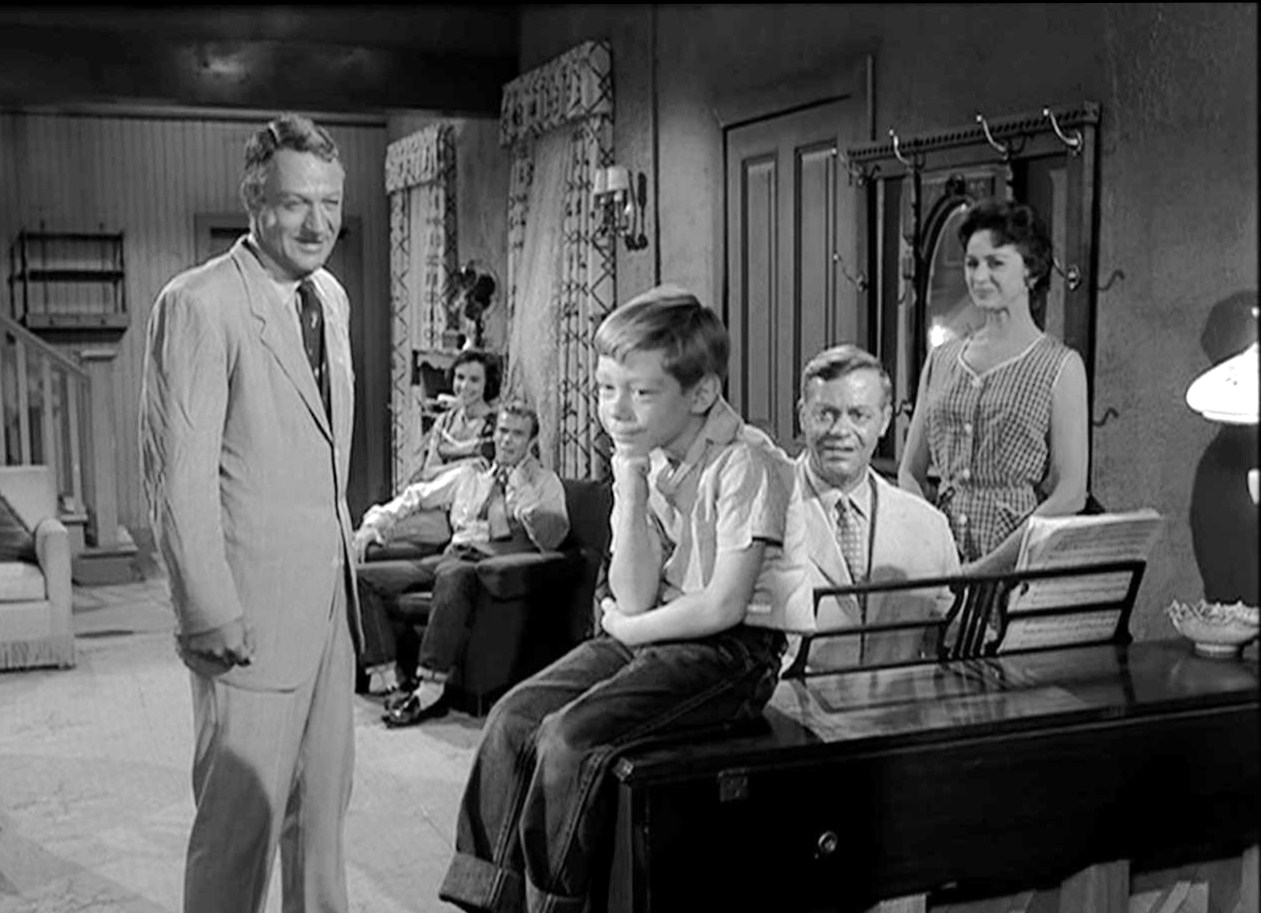
Monty Hall has died. He was 96 years old, so he had a good deal. Here's the pilot from his show.


I wasn't a big fan of Let's Make a Deal, so I don't really know what to say about him. But I’ve always wanted to write an essay about the Let’s Make A Deal Problem (LMaDP),  and I’ve never had an opportunity to do so. Well, it's now or never.
I’m not sure how well known LMaDP is outside of actuarial and mathy types of crowds. It was made famous in 1990 in a letter to Marilyn Vos Savant, who answered questions for her “Ask Marilyn” column in Parade Magazine.

The gist of the problem is as follows:

You are on a TV gameshow, and given a choice of three doors. One door hides a prize. The other two doors each hide garbage. You pick a door, and win what’s behind it. But before the host opens the door to reveal what you’ve won, he picks one of the other two doors and reveals that it hides garbage. He then gives you a choice between staying with the door you originally chose and switching to the other as-yet-unrevealed door. Should you switch? Before you answer, let me add some information which is essential, but often elided in the retelling: Going in, the host knows which door hides the prize, and is required by the rules of the game to open a door that you didn’t pick, and which hides garbage behind it. This, presumably, is to build excitement. Now, with that extra bit of information, should you switch or stick.

When Vos Savant was presented with the problem, she (correctly answered that you should switch. Specifically, you have a 2/3 chance of winning if you switch and a 1/3 chance of winning if you stick. The response was angry and vocal. She was roundly condemned as a know-nothing, setting back the cause of education, blah blah blah. I remember some of the senior actuaries at work were similarly incensed. Her response does initially seem counterintuitive; since you have two doors to choose from, and they seem the same. But she stuck to her guns. And she was right to do so.
What I'd like to do now is argue in several different ways. Then, finally, I want to end by answering the question of what makes the doors different.

Arguments
Argument 1: 100 doors
One of the most commonly used arguments presents a situation that is similar, but different in one crucial way. Specifically, it supposes that there are 100 doors, with one hiding a prize. After you pick a door, the host opens 98 others, revealing them all to be losers. he then gives you the chance to switch. Are you better off switching? Presumably the fact that there are so many more doors makes it easier to visualize that it's unlikely that you won with your initial pick.
Argument 2: Under what circumstances do you win by switching/sticking
Consider what circumstances lead you to win by switching and what circumstances lead you to win by sticking. If you initially choose the winning door (something which happens one time in three), you will win by sticking. If you initially chose a losing door (something which happens two times in three), you will win by switching. QED.
Argument 3: Enter the Bayesians
This is actually closely related to argument 2. Assume it doesn't matter whether you stick or switch. That means that you have a 50% chance of winning with your door. But you know that, once you choose your door, the host will open another and give you the choice. In other words, no matter what he does (i.e., whichever other door he reveals), your door will then have a 50% chance of being the winner. That means that, before he does anything your door has a 50% chance of being the winner, since the chance of your door being a winner (before he does anything) is equal to the weighted average of it being the winner after he does something (weighted by the probabilities of his taking each possible action).
So let's get this straight. If the game were different -- you pick a door and then, without anything being revealed, you can keep it or switch to one of the others -- the chances of your door being the winner are one in three. But adding the extra rules of the game as stated above, your initial door goes up from 1/3 to 1/2! That's a pretty good Schroedinger's door, there.

Argument 4: Simulation by spreadsheet
I created a little spreadsheet to simulate the situation. It's here. You can play along at home. Sheet1 has 10,000 simulations. In each, there are three doors -- A, B and C. The following happens:

  • In column C, the winning door is determined randomly
  • In column E, the door you (as the contestant) is determined randomly
  • In column H, the door the host opens is determined randomly, subject to the rule that it not be either the door chosen in column C or the door chosen in column E
  • Columns I and K display the doors you have by sticking and by switching
  • Columns L and M indicate whether you win by sticking or by switching (with a "1" in the appropriate column).
  • Column N is simply a check column. It should always be 1. Cell N1 serves as a check that every entry in column N is a 1. N1 should be zero, indicating that everything else is the same.
  • Cells L1 and M1 add up the number of simulations in which you win by sticking and in which you win by switching.

You can rerun the 10,000 simulations by selecting an empty cell (e.g., R2) and hitting the delete key. The relevant cells will be recalculated, and you can see that cells L1 and M1 will be somewhat close to 3,333 and 6,667 (respectively). I have rerun this simulation several times, and each time I get close to that split. Note that the odds of getting that exact split are low. If you flip a fair coin 1000 times, you will likely get close to 500 heads and 500 tails. But you are unlikely to get exactly that.

What Makes the doors different?
As I wrote above, it initially seems counterintuitive to say that one door is more likely to win than the other. There are two possibilities, and on the surface it can seem like they are the same, and therefore each has a 50% chance of winning. If the chances are not the same, there must be some asymmetry between them. So what is that asymmetry?

The asymmetry is in the way the two doors came to be candidates (i.e., why each is not the one that was revealed as not the winner).
  • The door you did not choose was not revealed to be a loser for one of two possible reasons:
    • Possibly, you chose the winner to start, in which case the host could have opened either remaining door, and he just chose the one he did; or
    • Possibly, you chose a loser, in which case one of the remaining doors is a winner, and the host had no choice but to reveal the one he revealed.
  • The door you initially chose was not revealed because the host is not allowed to reveal it.
Since the two remaining doors are not the same. the argument that they are equally likely to win because they are the same is false.

Friday, September 29, 2017

the records that parted the clouds

I was in high school when I first started getting seriously interested in music. In the time since then I have gotten many records and CDs in a variety of styles. There are some that I love, and some that I consider unlistenable.

But there are three records that will always have a place in my heart for (for lack of a better way of putting it) opening my eyes. I vividly remember my first time listening to each of these records. With each, it was like the clouds parted and I was in a new state of being. Yeah, that sounds melodramatic, but that's how it felt. I loved each of these records, and still do. I doubt that will ever change. But they are not necesarily my favorites.

There are other records that I like as much or more, but which weren't eye-opening the same way. There are some records that didn't make the same strong first impression on me, but that grew on me over time. Brinsley Schwarz' third album, Silver Pistol, comes to mind. There are others that I loved at first listen, but that didn't open my ears to something new. Sundown by Rank and File is a good example of that. It's probably my favorite cowpunk album, but by the time I heard it, I was already somewhat familiar with the genre so it didn't open a new frontier the same way Tales of the New West (listed below) by the Beat Farmers did.

One thing that these discs have in common is that they don't have a single weak track; they are strong from start to finish.

DE 7th (Dave Edmunds)

I bought Dave Edmunds' seventh solo album -- when it was a new release -- in the mistaken belief that he had been a member of the band, Ducks Deluxe. The straight-ahead no-nonsense rock and roll took my breath away. To this day Edmunds remains one of my favorites. I am not sure if this is his best album, as Repeat When Necessary and Tracks on Wax 4 each can make a string case. But this was my intro to Edmunds.

Tales of the New West (The Beat Farmers)

I got this record to review, as the music editor of a campus newspaper. It looked a little odd -- kind of country-ish based on the cover But it was put out by Rhino, which was a company I liked, so I took it for myself (instead of passing it on to one of my writers to review). And that was my introduction to cowpunk, which is still one of my favorite subgenres. I followed the Beat Farmers, buying every record, until the untimely death of Country Dick (onstage, during a concert) in 1995. They put out more good records, but none that came close to equaling their debut.

Heroes, Angels & Friends (Janey Street)

This was another review copy I got in college. My contact at Arista records included something in her cover letter about how Janey is from Queens (which, I guess, mattered to me because it was Queens College). I rolled my eyes at that, but when I put the record on the turntable, it convinced me. From the opening riff of "Me and My Friends," this was a tour de force of lust and machismo. In some ways she was like a female Bruce Springsteen, belting out songs of working class heroes trying to get by, or reaching for stardom. It's more melodic than Springsteen, though, with more piano and strings. And you could sing along to it. This is still one of my favorites, and I still listen to it and sing along (when no one is around to hear me).

Wednesday, September 27, 2017

watching twilight zone with sharon

Great news! Sharon has discovered The Twilight Zone. I'm not quite sure what the catalyst was, but she was asking about it a week or so ago. I explained the basic idea behind the show, and suggested she watch a couple of episodes on Netflix.

Ethan, of course, thinks she should watch Tales of Tomorrow. He says it was a better show with better-written stories and better stars. He's probably right -- my experience with this kind of thing is that he has good judgement. Except for Carnival of Souls. That's a great movie that seems like a long episode of TZ, yet he doesn't care for it. Anyway, it's not as easy to see ToT. TZ  is on  Netflix -- at least seasons 1,2,3 and  are. What's with that?

So last night, when I was just sitting down to write a blogpost -- yes, I have a bajillion ideas for posts that I need to write -- she asked me to watch TZ with her. Guess what won.

She asked me to suggest the best episodes to watch. Nothing wrong with that, except that I feel the pressure. What if I pick episodes that she doesn't like? Then she'll decide she doesn't like the show, and it'll be all my fault. So, to a degree, I punted and asked Blair to suggest episodes.

One thing I found interesting is that Sharon asked me if the "twilight zone" is a real thing. I explained that it isn't, but Rod Serling chose the name because it 's ill-defined but sounds serious and spooky. The main reason I find this interesting is that I remember having the same conversation with my mother decades ago when I first watched the show. With any luck we'll be watching some more on Friday.

It's been a long time since I'd watched the show. I remember most episodes well enough, but even so there are generally a lot of details that I'd forgotten. These are the ones we watched (not in order):

The Monsters Are Due on Maple Street
A neighborhood runs amok, and friends are at each others' throats as weird things are going on and they're convinced that it has to be space aliens and that one among them is a space alien.

Blair suggested this, because it reminds her of today's political scene, with the aliens in the role of the Russians, who are busy trying to create havoc and distrust in each other. I waspleasantly surprised to see Claude Akins in the lead. I remember him as Sherrif Lobo from BJ and the Bear (and its spinoff, The Misadventures of Sheriff Lobo). 

I have always felt that everyone is too quick to accept the teenager's suggestion that his comic books are a blueprint for what's ocurring, but I suppose that is necessary in order to fit the story in a half-hour show. And the explanatory coda is kind of goofy, but not bad.

The Eye of the Beholder
A woman is in a hospital, her face all bandaged up, because she's ugly. This is the eleventh attempt to make her less ugly, and she is anxiously waiting for the bandages to come off. Will she get to join society as a pretty woman? Or will she be banished to a community of ugly people?

This was my idea. It's not one of my favorite episodes, but my impression is that it's one of the better-known episodes, and gets referenced a lot in pop culture, so it's good for it to be part of her TZ education. As we were watching, I was noting how all the hospital personnel are shown in shadow so you never get to see their faces. That's necessary, of course, to make the whole episode work. But I was wondering if Sharon would pick up on it. She says she didn't think much about it, though in one scene she wondered, if it wouldnt be easier to just show the faces.

At the end, when you see close-ups of the staff's faces, she noted that they looked so fake. I pointed out that budgeting was probably very tight. Also, this was made for black and white TV, which had lower resolution than what she's watching now -- a remastered version on a high-definition TV. Given the technology of the time, the effect was probably adequate. That's something I wouldn't have thought of if not for the cinema history class I take with Keith Crocker.

And, as I was writing this post, Sharon came into the room with a rubber band around her head holding her nose up. 'I look like one of the pig people from "Eye of the Beholder.'"

The Silence
A loudmouth will not shut his yap, much to the annoyance of a fellow member of his aristocratic social club. So they bet -- $500,000 for a year of silence.

I suggested this episode. I believe it's one of the lesser known ones, but I have always found it haunting. It's also interesting because there's nothing supernatural or otherworldly about it. The twist ending is purely natural. 

One detail I'd forgotten (assuming I'd ever noticed it) is that Jonathan Harris (Doctor Smith in Lost in Space) played the lawyer. The final scene is still as powerful, all these years later. And it elicited a "whoa" from Sharon.

The episode also gave me a chance to talk to her about inflation -- the $500,000 bet was worth a lot more then than it would be now.

It's a Good Life
Life is good in Peaksville. And you'd better believe it, or little Anthony will kill you with his mind.

This one was Blair's idea, because it seems almost as if it was written as an allegory for life in North Korea. But even aside from that this is one of the best, one of the creepiest, episodes of the show. Also, like a couple other episodes on this list, it's one of the iconic installments, and gets frequently referenced in pop culture. Billy Mumy, in his second of three appearances on the show, is great. I sat there with Sharon, pointing out to her how Dan was sitting in the back of the room, getting drunk and angry.

Living Doll
Annabelle has bought her daughter a doll named Talky Tina. But her husband doesn't approve of the purchase. Tina, in turn, doesn't approve of the husband.

This is another one of the iconic episodes that should be a part of anyone's basic Twilight Zone education. What's amazing about this episode is that it's so good. Seriously, a man is having a feud with his stepdaughter's doll. WTF? But it works; the suspense is palpable. And Sharon really liked this one.

I was curious about who voiced Tina. Since she sounded a lot like the girl, I was wondering if it was the same actress. That would have lent an extra creep factor to the show -- the notion that maybe Tina is really just some kind of manifestation of the daughter's latent ESP, and acting out her anger. Alas, she was voiced by June Foray. That's kind of interesting to me; three months ago, I wouldn't have recognized the name. But Foray died in July, and we talked about her in the cinema history class -- she was one of the great voice actors in cartoondom, and that's an area that Joe (from class) is really interested in. The only question left is whether Foray was purposely trying to sound like the daughter.


Sunday, September 24, 2017

deranged (cinema history class)

Session: Cinematic Serial Killers, week 3
Movie: Deranged (197)
Directed by Jeff Gillen and Alan Ormsby
As always, there may be spoilers here. And the trailer may be NSFW and/or NSFL

Plot:

Ezra, devoted to his mother, can't cope with her death. His mind snaps and he turns rather ghoulish. Hilarity ensues.

Background and Reaction:

Long story short? Roberts Blossom should have gotten an Oscar for this portrayal of Ezra Cobb, a fictionalized version of real-life serial killer Ed Gein. Of course, the Academy doesn't give Oscars for low budget horror movies. Pity.

Knowing that this film, like The Texas Chainsaw Massacre, was based on Gein, I was somewhat apprehensively expecting something like that well-known classic. I was pleasantly surprised to find that it was very different. It appears to me that the best way to put it is that TCM was inspired by Gein while this is more of a retelling of his story, modified as appropriate.

This is one of those movies that really just gets under your skin -- Cannibal Holocaust is another example. It's creepy and disturbing, but also compelling. It's the kind of thing that anyone interested in the horror film genre should see. Blossom, as Cobb, is brilliant. His facial ticks and mannerisms were a work of art. The story-telling is paced really nicely, and the use of subtle irony for humor is good as a kind of pressure valve to relieve just enough tension.

What made this so great as a "ten" is that it was such a surprise. When Joe quipped that it was "an unexpected ten" I noted that "The unexpected tens are the tenniest tens of all."

Ratings:
Joe: 10
Dave: 9.8-9.9
Sean: 3 out of 4
Scott: 9
Me: 10
Ethan: 9.5

Bechdel:

Deranged fails the Bechdel test.

Tuesday, September 19, 2017

the honeymoon killers (cinema history class)

Session: Cinematic Serial Killers, week 2
Movie: The Honeymoon Killers (1970)
Directed by Leonard Kastle
As always, there may be spoilers here. And the trailer may be NSFW and/or NSFL

Plot:

A con man marries women to cheat them out of their money. But his true love is jealous. Hilarity ensues.

Background and Reaction:

I went into this with somewhat low expectations, though I'm not exactly sure why. But it was really quite good. Since it was low budget, and shot in documentary style, it reminded me of Pink Flamingos, though it wasn't obscenity-driven the way that was. In addition to similar production values as PF, though this had better values, Shirley Stoler seemed in many ways like a female Divine. Of course, when she's in the lake screaming "you promised!" she reminded me more of Edith Massey as the Edie (the egg lady).

I kept finding myself trying to figure out what was going to happen -- is this woman playing them? will they get caught now? And that's often a good sign, since it means I've engaged with the movie. The acting was generally subpar, but that didn't really deter my appreciation.

This is really a hidden gem.

Ratings:
Christina: 9
Dave: 9.2-9.3
Scott: 8
Ethan: 7
Sean: 2 (out of 4)
Me: 9.25

Bechdel:

The Honeymoon Killers passes the Bechdel test.

Pittsburgh Reference:
At some point one of the characters asked "where will we go?" I suggested Pittsburgh.